

When sourcing a prepainted aluminum coil, most procurement managers lock their eyes on the topcoat. They double-check the paint brand, request specific micron thicknesses for the PVDF or PE layers, and negotiate the price per ton.
However, if you run a high-speed automatic stamping line for aluminum ceilings, precision roll forming machines for metal roofing, or advanced production lines for aluminum composite panels (ACP), you have likely faced a severe production nightmare. A batch of color coated aluminum coil stock arrives at your warehouse, and the paint thickness passes your micrometric inspection. Yet, the exact moment your workshop machinery slits, shears, or deep-draws the metal sheet, the paint film curls up like loose skin. You can literally scratch the premium coating off with a casual fingernail.
Why Paint Delamination Occurs: The Critical Role of Chemical Pretreatment
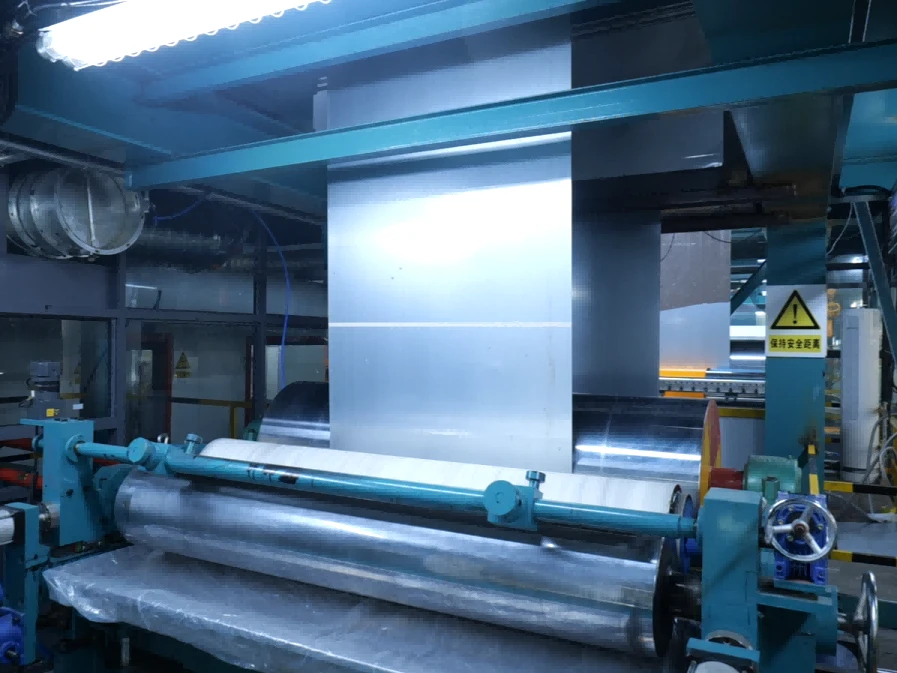
An untreated aluminum alloy coil naturally carries an unstable oxide film, compounded by residual rolling oils, aluminum dust, and atmospheric contaminants from the cold rolling mill.
If a coil coating line skips or rushes the chemical pretreatment stage before applying the primer, the coating is essentially baked onto a layer of grease and dirt. While the finished prepainted aluminum sheet might look flawless upon delivery, it will inevitably fail under mechanical stress during severe forming or under environmental exposure, such as salt spray and humidity. The paint film and the bare aluminum substrate will completely lose cohesion.
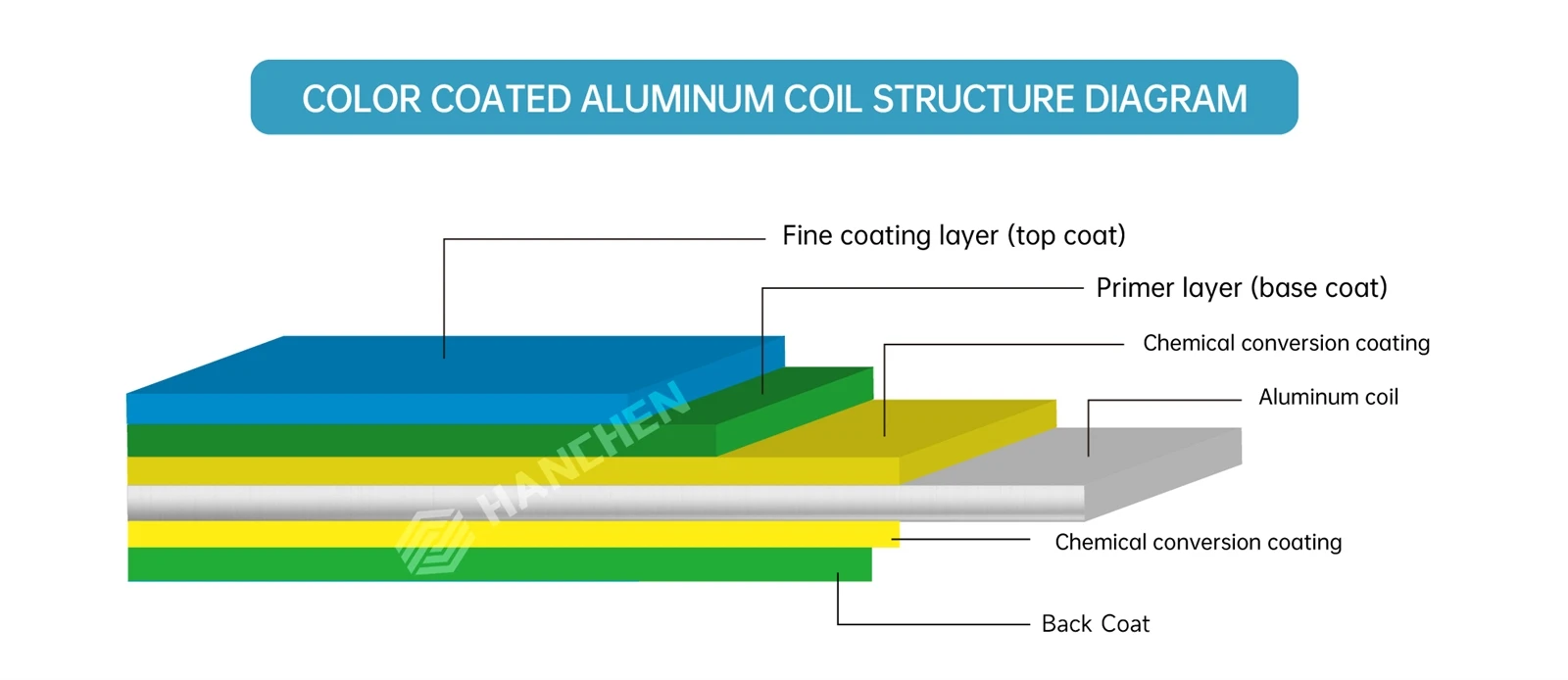
This is where precise chemical conversion coating, or passivation, comes into play. A high-grade, chrome-free passivation liquid does not just sit on the metal sheet; it chemically reacts with the aluminum substrate to form a nanostructured interface.
Production Details That Separate Premium Prepainted Aluminum from Scrap
A reliable coil coating manufacturer treats the cleaning and pretreatment section with the same engineering precision as the baking ovens. To guarantee a flawless prepainted aluminum coil that survives extreme fabrication, three production parameters must be strictly controlled on the line:
Before the passivation process begins, the moving aluminum coil web must achieve a 100% water-break-free surface. The continuous production line must utilize an aggressive alkaline degreasing stage to strip stubborn mill oils, followed by a thorough water rinse, and a specialized acid pickling stage to neutralize and eliminate black aluminum smut.
Advanced manufacturers use a dedicated roll coater, also called a chemical coater, to apply the passivation solution evenly, rather than using unreliable spray or dip methods. Technicians must check the chemical concentration, bath temperature, and roll pressure every single hour. If the conversion coating is too thin, it cannot anchor the primer coat. If it is too thick, the passivation layer itself becomes brittle and shears under mechanical stress.
After the chemical coater applies the liquid passivation, the running aluminum web enters a drying oven where it must reach a precise Peak Metal Temperature to cross-link and form a stable crystalline structure. Under-curing or over-baking at this stage renders the subsequent coating adhesion useless.
How to Verify Coating Adhesion Quality Before Processing Your Aluminum Roll
You cannot afford to risk your automated stamping dies and expensive press brakes on pure guesswork. When a new aluminum roll shipment arrives at your factory, use these three standard industrial testing methods to verify that the coating will not delaminate over its service life.
| Industrial Testing Method | Standard Operation Process | Passing Benchmark (The Expert Standard) |
| The Cross-Cut Tape Test (ASTM D3359) | Use a cross-cut tester or a sharp utility knife to score a lattice pattern of 1 mm x 1 mm squares through the coating down to the bare aluminum metal. Apply a certified testing tape like 3M 610 firmly over the grid, rub it to ensure solid contact, and pull the tape back sharply at a 60-degree angle. | The edges of the cuts must remain completely smooth, with zero squares detached from the aluminum substrate, matching classification 5B or 4B. |
| The T-Bend Flexibility Test (ASTM D4145) | Place a sample strip of the color coated aluminum sheet into a bending machine or vise and fold it 180 degrees over itself. This is a 0T bend. Continue Operating Procedure wrapping it around additional thicknesses of the same gauge aluminum sheet for 1T, 2T, or 3T bends. Apply adhesive tape over the creased spine and rip it away. | A premium-grade prepainted coil allows extreme bending with zero cracking and zero paint pick-off along the radius. |