

June 2026 delivered a major price correction across the global aluminum sector, pulling primary metal down to its lowest baseline of the first half of the year (H1 2026). This shift offers an exceptional cost-saving opportunity for downstream procurement of Color-Coated Aluminum Coil.
H1 2026 Macro Context & June Market Trends
The first half of 2026 was marked by intense volatility. Primary aluminum spent the early months on an aggressive upward trajectory, fueled by supply-side anxieties and energy constraints that pushed domestic prices above 25,200 CNY/mt in March and past 25,100 CNY/mt in late April.
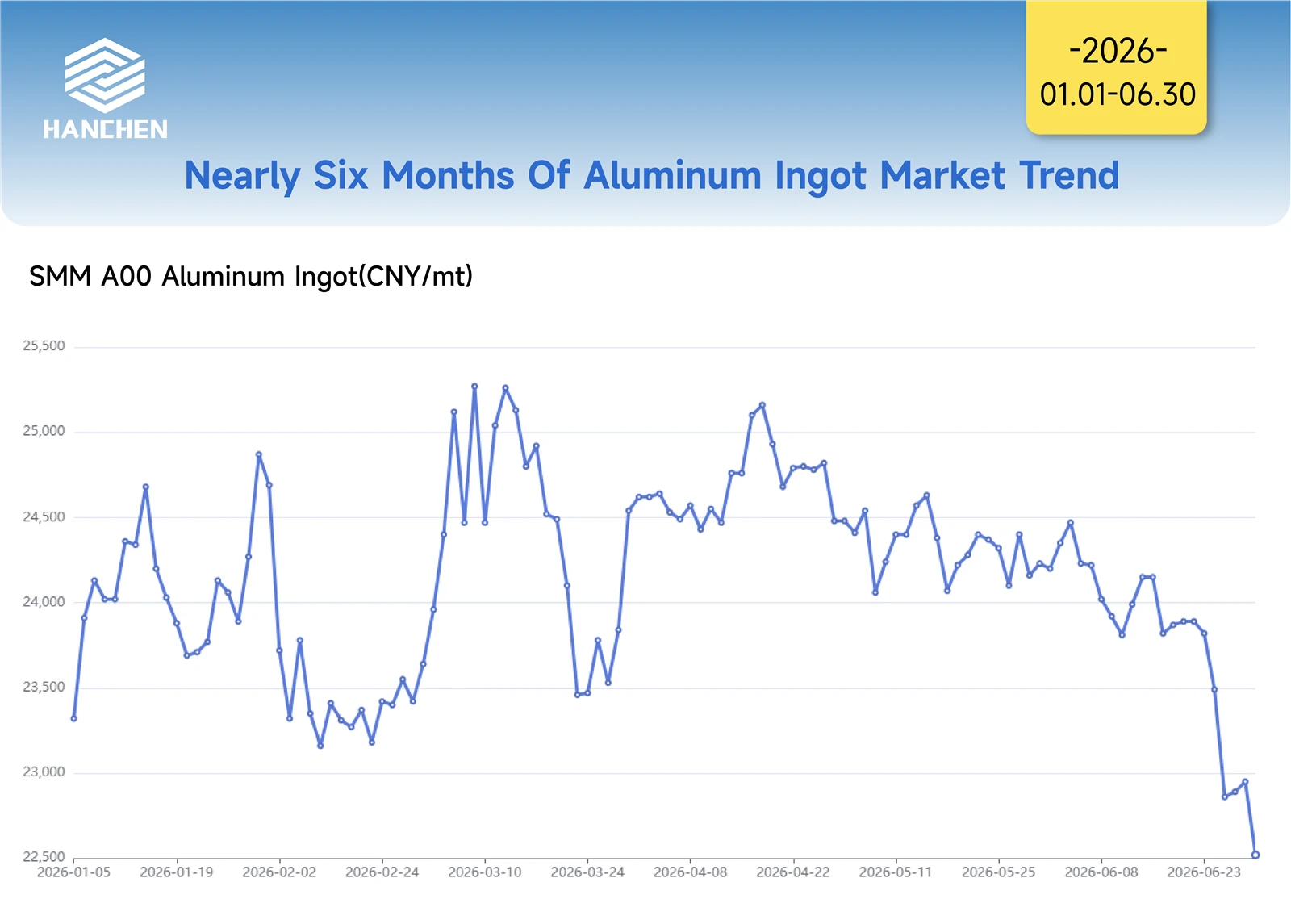
However, June brought a definitive structural reversal driven by macroeconomic headwinds. High western interest rates cooled international manufacturing, while expanding global warehouse inventories erased early-year supply premiums. This macro shift, combined with a seasonal summer lull in domestic construction, broke the market's upward momentum.
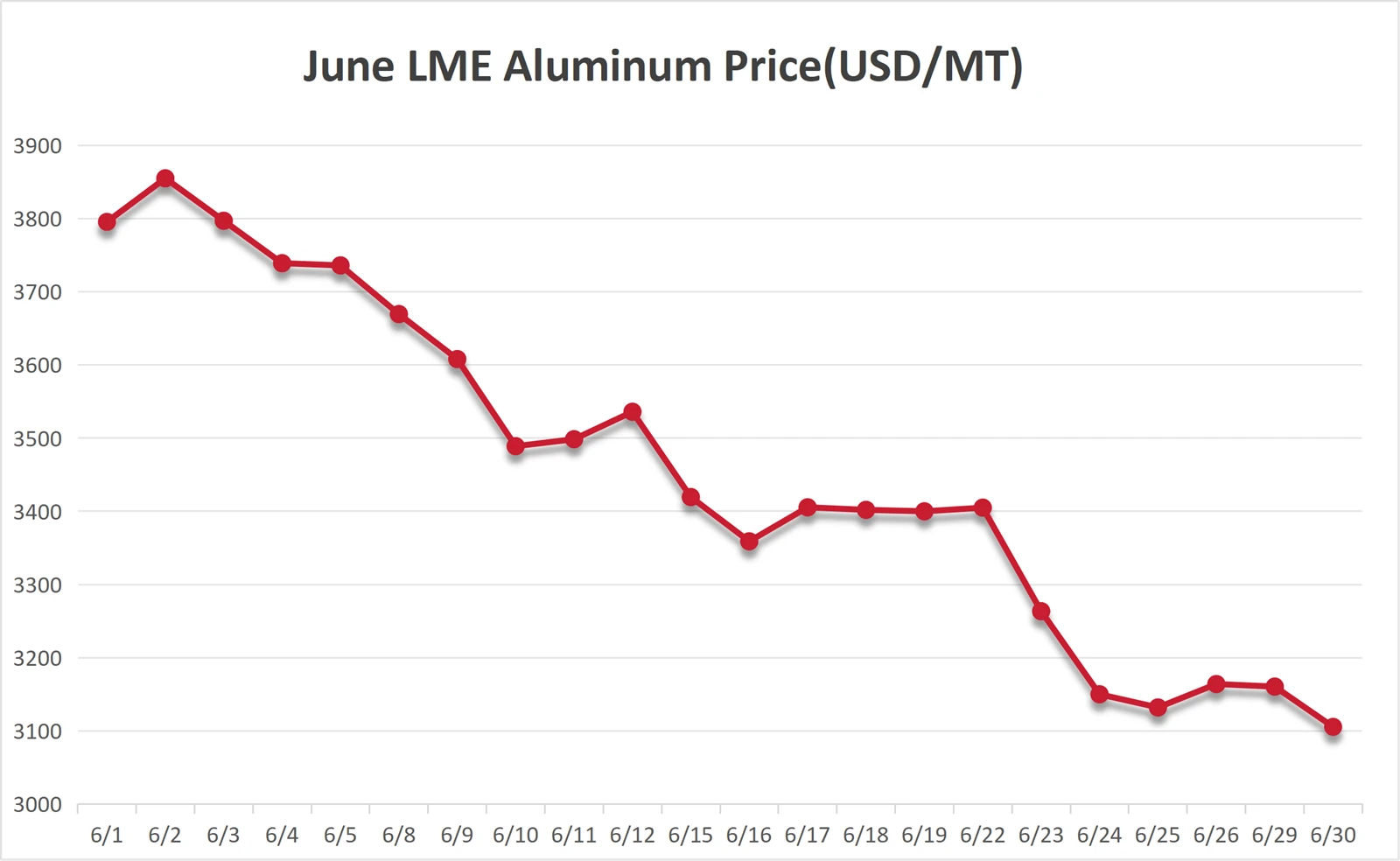
June opened strong at $3,795.5/mt and peaked at $3,855.0/mt on June 2. A continuous downward trajectory followed, breaking past the $3,400 support level mid-month and bottoming out at $3,105.5/mt on June 30-a major 18.2% reduction in substrate base costs.
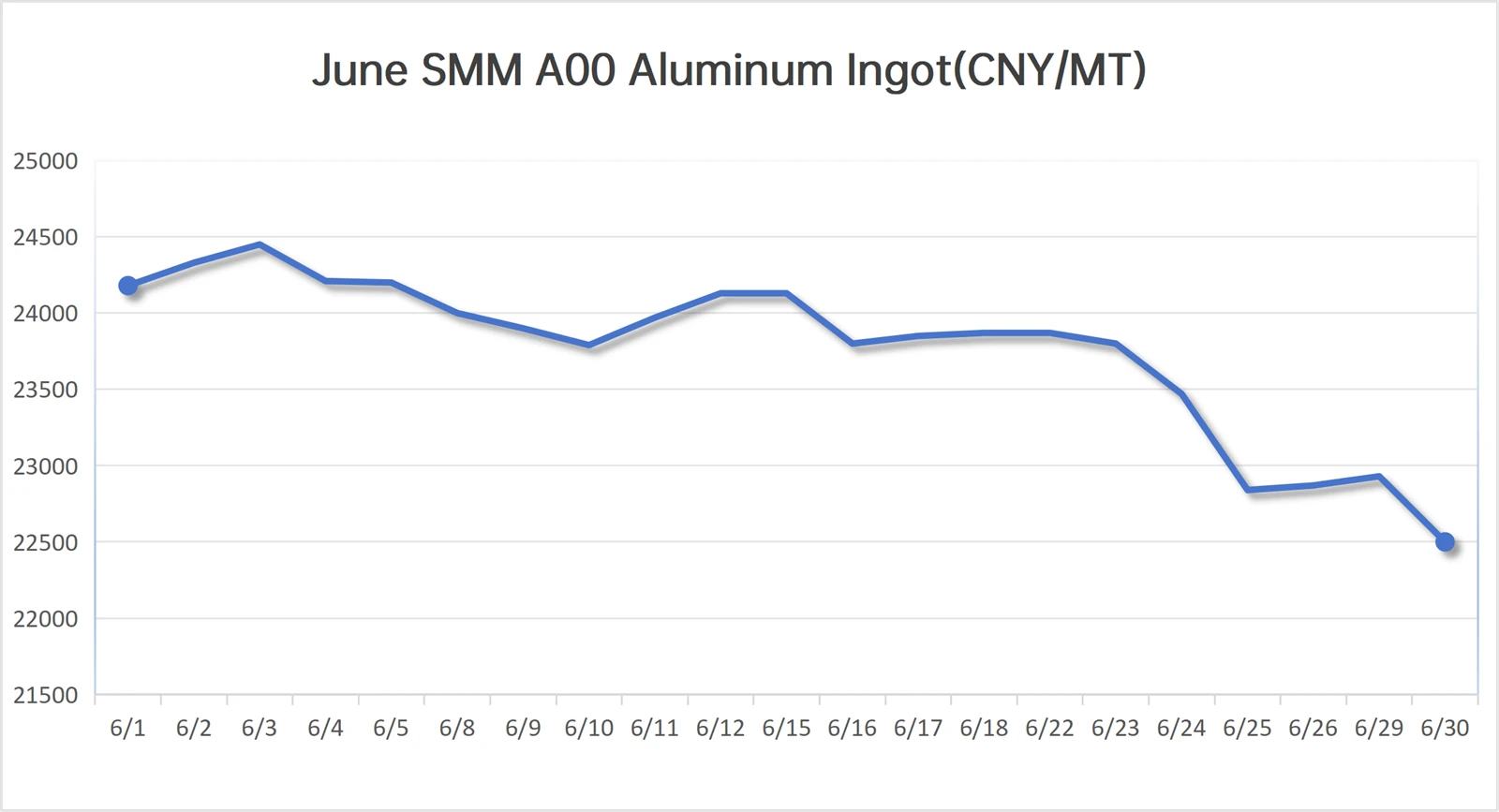
Prices started June at 24,180 CNY/mt, reached a brief high of 24,450 CNY/mt on June 3, and then steadily deflated. Breaking below the key 24,000 CNY/mt threshold, the market closed at 22,500 CNY/mt on June 30, marking a 7.4% drop and setting a new six-month low.
Strategic Impact on Color-Coated Aluminum Coils
Because the aluminum substrate represents the overwhelming majority of finished color-coated coil costs, this correction flows directly into factory gate pricing, offering immediate margin relief for buyers.

The price stabilization observed near the $3,100 USD / 22,500 CNY floor at month-end signals that the bulk of the correction has been realized, significantly reducing the risk of inventory devaluation. Furthermore, because international prices corrected much faster than domestic prices, the compressed global price spread allows overseas distributors to secure highly competitive, freight-inclusive contracts for upcoming architectural and industrial projects before autumn demand triggers a Q3 rebound.